
The US dollar continues to move up and down with the risk flavor of the day, as today it was a move by traders to being more risk oriented, and consequently the greenback fell in value as a result against other major currencies.
Currencies linked to commodities peformed against against the US dollar, while the British Pound weakened against the dollar.
While the UK isn't focused on as much in relationship to the European Union because they still have their own currency, it is in danger of losing its AAA debt rating according to Fitch Ratings, as their slow response in implementing austerity measures is causing investors to lose confidence in the Pound.
The Canadian, Australian and New Zealand dollars did well today because of their link to commodities, after taking a beating lately because of risk concerns related to raw materials.
Showing posts with label Greenback. Show all posts
Showing posts with label Greenback. Show all posts
Tuesday, June 8, 2010


Thursday, September 24, 2009
Marc Faber: Ignore Ben Bernanke
Marc Faber
Marc Faber is advising people to not keep their investments in the U.S. dollar, and not to invest in things like US bonds.
As far as the assertion by Ben Bernanke that "We will keep inflation in check," Faber says to completely ignore that fantasy.
Why Faber says this is the inevitable need for the U.S. government, via the Federal Reserve, to print more money, which will continue to put downward pressure on the greenback. He said with someone like Bernanke running the Federal Reserve, we need to operaton under the assumption the U.S. dollar will be worth close to zero, if not zero. He reinforces what he has said in the past, that we shouldn't in any way trust the Federal Reserve.
Faber instead says investors should place their money in investments that will hold their value, using gold as one of the options investors need to have some of their money in.
Over the next 10 years, Faber points to the soon rush to retirement of Baby Boomers, who will put increasing demands on Medicare and Social Security, which, along with other areas, will force the government to print an enormous amount of money.
That will result in even more inflation, and the loss in buying power of the U.S. dollar, if not its complete collapse.
Marc Faber
Marc Faber is advising people to not keep their investments in the U.S. dollar, and not to invest in things like US bonds.
As far as the assertion by Ben Bernanke that "We will keep inflation in check," Faber says to completely ignore that fantasy.
Why Faber says this is the inevitable need for the U.S. government, via the Federal Reserve, to print more money, which will continue to put downward pressure on the greenback. He said with someone like Bernanke running the Federal Reserve, we need to operaton under the assumption the U.S. dollar will be worth close to zero, if not zero. He reinforces what he has said in the past, that we shouldn't in any way trust the Federal Reserve.
Faber instead says investors should place their money in investments that will hold their value, using gold as one of the options investors need to have some of their money in.
Over the next 10 years, Faber points to the soon rush to retirement of Baby Boomers, who will put increasing demands on Medicare and Social Security, which, along with other areas, will force the government to print an enormous amount of money.
That will result in even more inflation, and the loss in buying power of the U.S. dollar, if not its complete collapse.
Marc Faber
Wednesday, January 14, 2009
U.S. Dollar Up As Investor Safety Options Narrow
The U.S. dollar was up against the majority of major currencies today, as options for places of safety for investors narrow.
At this time the market is ignoring the weak underlying fundamentals of the U.S. dollar, and are focused on other things like the emerging euro-zone sovereign credit issues, along with the interest rate cuts of other nations' currencies, which influence those looking for safety.
Only the Japanese yen, Swiss franc, South Korean won and British pound gained against the greenback today.
Even though interest rate cuts of other currencies have helped shore up the dollar, it's not certain that those will continue, as some officials of the ECB rate-setting Governing Council want to slow rate cuts down.
As far as sovereign credit ratings go, credit ratings from a number of countries are under pressure, and their debt could be downgraded. That's already happened to Greece, as Standard & Poor's dropped them a level, saying the finances of the country are weak.
Other countries that could follow soon are Spain, Portugal and Ireland, according to the S&P. Ratings for the U.S. remain AAA for now.
At this time the market is ignoring the weak underlying fundamentals of the U.S. dollar, and are focused on other things like the emerging euro-zone sovereign credit issues, along with the interest rate cuts of other nations' currencies, which influence those looking for safety.
Only the Japanese yen, Swiss franc, South Korean won and British pound gained against the greenback today.
Even though interest rate cuts of other currencies have helped shore up the dollar, it's not certain that those will continue, as some officials of the ECB rate-setting Governing Council want to slow rate cuts down.
As far as sovereign credit ratings go, credit ratings from a number of countries are under pressure, and their debt could be downgraded. That's already happened to Greece, as Standard & Poor's dropped them a level, saying the finances of the country are weak.
Other countries that could follow soon are Spain, Portugal and Ireland, according to the S&P. Ratings for the U.S. remain AAA for now.
Friday, November 14, 2008
Dollar Should be in for a Rough Ride Going Forward
Now the the Chinese have decided to focus on their own infrastructure with the approximate $585 billion stimulus plan, they'll start cutting back on buying U.S. treasuries.
Acquisition of U.S. treasuries worked in China's favor, as it provided money to U.S. consumers who would then buy Chinese products manufactured in the country.
This has worked as the Federal Reserve has been able to keep interest rates low because of the over $1 trillion China has invested in U.S. government securities, which helped prop up the dollar; even though it has struggled until recently.
Consumers were then able to use cheap money to acquire a huge amount of consumer goods; at least until the mortgage bubble broke, and the weakness of those buying habits exposed themselves.
So we're going to see much less Chinese money going to U.S. securities; continued forced liquidation of funds to get access to more cash; printing more money to pay off misguided stimulus plan; and credit continue to be hard to get.
This will end up being "perfect storm" against the greenback, and will eventually put enormous downward pressure on it.
Acquisition of U.S. treasuries worked in China's favor, as it provided money to U.S. consumers who would then buy Chinese products manufactured in the country.
This has worked as the Federal Reserve has been able to keep interest rates low because of the over $1 trillion China has invested in U.S. government securities, which helped prop up the dollar; even though it has struggled until recently.
Consumers were then able to use cheap money to acquire a huge amount of consumer goods; at least until the mortgage bubble broke, and the weakness of those buying habits exposed themselves.
So we're going to see much less Chinese money going to U.S. securities; continued forced liquidation of funds to get access to more cash; printing more money to pay off misguided stimulus plan; and credit continue to be hard to get.
This will end up being "perfect storm" against the greenback, and will eventually put enormous downward pressure on it.
Monday, November 3, 2008
Deleveraging Continues to Push U.S. Dollar Upward
As major funds continue to deleverage in order to access cash, the U.S. dollar continues to be a major beneficiary, as the greenback continues to strengthen against major currencies.
Deleveraging means when funds and investors have to sell, they are buying back the U.S. dollar the had previously sold. That drives up the value of the dollar.
With no way of knowing how long companies, investors and funds will have to do this, the length of the time the U.S. dollar will remain strong will also remain unknown.
The U.S. dollar rose against the euro, British pound and yen during the trading session.
Within the dollar index (DXY), it increased to 86.35, a gain of 1.3 percent from the 85.834 close on Friday. The dollar index measures the U.S. dollar against six currencies.
Deleveraging means when funds and investors have to sell, they are buying back the U.S. dollar the had previously sold. That drives up the value of the dollar.
With no way of knowing how long companies, investors and funds will have to do this, the length of the time the U.S. dollar will remain strong will also remain unknown.
The U.S. dollar rose against the euro, British pound and yen during the trading session.
Within the dollar index (DXY), it increased to 86.35, a gain of 1.3 percent from the 85.834 close on Friday. The dollar index measures the U.S. dollar against six currencies.
Thursday, October 23, 2008
How Long Will the U.S. Dollar Continue to Rise?
... At least as long as it takes for investors to unwind their positions.
The major reason behind the strengthening of the U.S. dollar is the money investors borrowed over the last several years that is now being called in by lenders.
With the vast majority of that debt being dollar-denominated, it has forced investors to do whatever they can to find greenbacks to pay off those loans. That, of course, has pushed up the value of the dollar.
The majority of this is happening because of the positions held by institutional investors.
Even though this is all true, the tremendous upward movement of the dollar is due for a correction, and I would think it will have to happen sometime soon.
In reality, the dollar really isn't stronger than other currencies, as explained, but it is the currency used in most transactions that have to be unwound. Once that period of time is over, we'll see tremendous downward pressure on the dollar as inflationary pressures once again dominate the currency.
Still, the dollar is expected to continue rising, even though it will experience temporary breathers and drop over a few sessions during this time of unwinding.
The major reason behind the strengthening of the U.S. dollar is the money investors borrowed over the last several years that is now being called in by lenders.
With the vast majority of that debt being dollar-denominated, it has forced investors to do whatever they can to find greenbacks to pay off those loans. That, of course, has pushed up the value of the dollar.
The majority of this is happening because of the positions held by institutional investors.
Even though this is all true, the tremendous upward movement of the dollar is due for a correction, and I would think it will have to happen sometime soon.
In reality, the dollar really isn't stronger than other currencies, as explained, but it is the currency used in most transactions that have to be unwound. Once that period of time is over, we'll see tremendous downward pressure on the dollar as inflationary pressures once again dominate the currency.
Still, the dollar is expected to continue rising, even though it will experience temporary breathers and drop over a few sessions during this time of unwinding.
Monday, October 13, 2008
World Bankers Aiding in Flooding Markets with U.S. Dollars
In a big attempt to release liquidity into the market, the Federal Reserve is getting the help of the Swiss central bank, Bank of England and the ECB, as they are getting together to auction off unlimited dollar funds.
This is unique in history as past dollar swaps were always capped at a certain level. In this case funds auctioned will be unlimited.
Maturity dates for the funds will be offered for 7 days, 28 days, and 84 days for a fixed rate respectively.
These swaps have been one of the reasons the U.S. dollar has continued to strengthen in the last months.
The greenback fell today against the euro and pound, as well as a number of major Latin American currencies.
Today the Dow Jones Industrial Average rose by its highest one-day point total in history, gaining 936 points, to finish the session at 9387.61
This is unique in history as past dollar swaps were always capped at a certain level. In this case funds auctioned will be unlimited.
Maturity dates for the funds will be offered for 7 days, 28 days, and 84 days for a fixed rate respectively.
These swaps have been one of the reasons the U.S. dollar has continued to strengthen in the last months.
The greenback fell today against the euro and pound, as well as a number of major Latin American currencies.
Today the Dow Jones Industrial Average rose by its highest one-day point total in history, gaining 936 points, to finish the session at 9387.61
Thursday, September 4, 2008
Today U.S. Dollar Strongest against the Euro in 2008
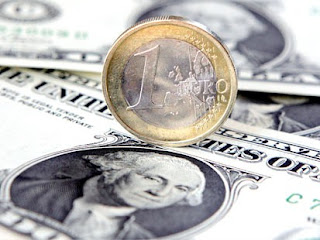
With the European Central Bank cutting its outlook for growth for the European Union, it suggests there will probably be interest rate cuts soon, which rallied the U.S. dollar to its highest level against the euro this year.
According to the a statement by the chairman of euro zone finance ministers, Jean-Claude Juncker, the euro is still overvalued even though it has fallen recently. That also contributed to the weakening against the dollar.
ECB president Jean-Claude Trichet added that while the lending remains at 4.25 percent, inflation is still high and he views risk to the upside.
Growth for the 15-nation region is projected to grow at about a 1.1 to 1.7 percent rate, says the ECB. For 2009 growth is expected to be between 0.6 percent and 1.8 percent.
The euro fell as low as $1.4321 agaisnt the U.S. dollar, and was at $1.4332 late in the trading day. That's the lowest since December 2007.
Against the yen the dollar fell 1.1 pecent to 107.12.
Tuesday, August 19, 2008
Weaker US Dollar and Related News
Dollar slides on higher US inflation, oil gain
FOREX-Profit-taking, weak stocks drag US dollar lower
U.S. inflation pressures mount
Dollar Gives Crude a Lift
The Dollar, Oil and Airlines: A Nice Relationship Until The Government Steps In
Gold firms as US dollar eases but uncertainty remains
Gold ends up; weak dollar fuels commodities rally
Canada's Dollar Rises as US Dollar Falls, Commodities Rebound
Canada's Dollar Rises as US Dollar Falls, Commodities Rebound
FOREX-Profit-taking, weak stocks drag US dollar lower
U.S. inflation pressures mount
Dollar Gives Crude a Lift
The Dollar, Oil and Airlines: A Nice Relationship Until The Government Steps In
Gold firms as US dollar eases but uncertainty remains
Gold ends up; weak dollar fuels commodities rally
Canada's Dollar Rises as US Dollar Falls, Commodities Rebound
Canada's Dollar Rises as US Dollar Falls, Commodities Rebound
Tuesday, August 5, 2008
Dollar Gains Against Major Latin Currencies
The U.S. dollar enjoyed gains against major Latin American currencies today, against the backdrop the Federal Reserve was going to keep interest rates where they're at, with no plan on raising them any time soon.
Today's gains were against the Chilean peso, Peruvian Sol, Brazilian real, Mexican Peso and Colombian peso.
With the Chilean peso, the dollar increased as high as a two-month high of 515.13, although falling back close to the end of the session.
Against the Peruvian sol, the greenback rose to a two-week high of 2.8350, in contrast to the 2.7725 close on Monday.
The dollar advanced for an 8-day high against the Brazilian real, quickly jumping to 1.5775 at about 9:00 am EST.
With the Mexican peso it also got off to a quick start in the morning, as it grew from its poor performance yesterday of 8.8568; a multi-year low. It increased to 9.9377 early in the morning, and held fairly strongly at the end of the session.
Today's gains were against the Chilean peso, Peruvian Sol, Brazilian real, Mexican Peso and Colombian peso.
With the Chilean peso, the dollar increased as high as a two-month high of 515.13, although falling back close to the end of the session.
Against the Peruvian sol, the greenback rose to a two-week high of 2.8350, in contrast to the 2.7725 close on Monday.
The dollar advanced for an 8-day high against the Brazilian real, quickly jumping to 1.5775 at about 9:00 am EST.
With the Mexican peso it also got off to a quick start in the morning, as it grew from its poor performance yesterday of 8.8568; a multi-year low. It increased to 9.9377 early in the morning, and held fairly strongly at the end of the session.
Monday, April 28, 2008
US dollar Drops Again, Federal Reserve Decision Looming
The US dollar declined again against several major currencies, as most markets look toward the decision of the Federal Reserve later in the week, which most expect will cut the rate by a quarter point. Even so, the unsurety of what the Fed will do has investors holding back on the greenback until the decision is revealed.
Performing strongly against the dollar was the euro again, which climbed to $1.5645, an increase over the $1.5593 in New York on Friday. The British pound also did well, rising to $1.9900, up from $1.9818.
Also gaining was the Swiss franc, with the dollar buying 1.0353. That was down from what the dollar bought on Friday: 1.0367. The Candian looney also strengthened, ending at 1.0119, in contrast to 1.0164 the U.S. dollar bought on Friday as well.
Another factor in the ongoing weakening of the dollar is the high inflation in Europe, which pretty much guarantees rates won't be cut over there.
Most think there will be a cut on Wednesday by the Fed, and that they'll probably hold cuts for some time.
Performing strongly against the dollar was the euro again, which climbed to $1.5645, an increase over the $1.5593 in New York on Friday. The British pound also did well, rising to $1.9900, up from $1.9818.
Also gaining was the Swiss franc, with the dollar buying 1.0353. That was down from what the dollar bought on Friday: 1.0367. The Candian looney also strengthened, ending at 1.0119, in contrast to 1.0164 the U.S. dollar bought on Friday as well.
Another factor in the ongoing weakening of the dollar is the high inflation in Europe, which pretty much guarantees rates won't be cut over there.
Most think there will be a cut on Wednesday by the Fed, and that they'll probably hold cuts for some time.
Thursday, April 24, 2008
US dollar Strengthens Against Most Major Currencies
With the exception of the Canadian dollar, the U.S. dollar gained against the major currencies today, including its best performance against the euro since December 2007. The euro finished down 0.0209 to end at 1.5679 against the U.S. dollar.
The U.S. Dollar Index ended up by 0.757 points to finish at 72.575. The Index measures the US dollar against the Canadian dollar, pound sterling, Swedish krona, Japanese yen, and euro.
"Now that we tried and failed to stay above $1.60 in euro/dollar, it looks like we're coming back to the bottom," said Brian Dolan, head of research at consultancy Forex.com, in Bedminster, New Jersey. "The U.S. data today is pretty clearly dollar positive and we're coming off some weaker European data."
The Zurich-based UBS AG looks at the euro's performance against the dollar to fall in the range of $1.47 in three months, while within a month it projects it to be at about $1.55.
Better-than-expected employment news and strengthening of the dollar has investors and analysts wondering which way the Fed will go at their meeting next week as far as rate cuts go. It looks like it could be a toss up whether the expected quarter-percentage-point cut will come.
The U.S. Dollar Index ended up by 0.757 points to finish at 72.575. The Index measures the US dollar against the Canadian dollar, pound sterling, Swedish krona, Japanese yen, and euro.
"Now that we tried and failed to stay above $1.60 in euro/dollar, it looks like we're coming back to the bottom," said Brian Dolan, head of research at consultancy Forex.com, in Bedminster, New Jersey. "The U.S. data today is pretty clearly dollar positive and we're coming off some weaker European data."
The Zurich-based UBS AG looks at the euro's performance against the dollar to fall in the range of $1.47 in three months, while within a month it projects it to be at about $1.55.
Better-than-expected employment news and strengthening of the dollar has investors and analysts wondering which way the Fed will go at their meeting next week as far as rate cuts go. It looks like it could be a toss up whether the expected quarter-percentage-point cut will come.
Monday, April 14, 2008
Investors Ignore G-7 Currency Shift

Seeming to think the the warning by the G-7 about steep fluctuations in the exchange rates could cause harm to the global economy, French Finance Minister Christine Lagarde talked down to investors saying they don't understand the significance of the G-7's shift in its outlook on exchange rates.
That was in response to the ongoing decline of the dollar which is starting to impact exports from the strengthening currencies of other countries.
Legard said in an interview: "It's a strong statement which I am not sure the markets have yet fully understood and appreciated."
My thought is: Who cares? That's why it's called a market, and market forces are impacting the currency rates; that's how it should be. To attempt to strenghthen the U.S. dollar so European companies can benefit doesn't do anything for Americans.
Until there are real actions taken, rather than just talking the talk, most investors aren't going to sell their euros or other strong currencies in order to listen to some bureaucrats who want their interests to be put ahead of others.
Thursday, April 3, 2008
Volatility Should Continue for U.S. Dollar

The U.S. dollar was mixed today, as it fell strongly against the Canadian and Australian dollar, and the British pound.
It did manage to gain against the euro based on Eurozone Retail Sales, which fell by 0.5 percent. It also gained strongly against the New Zealand dollar, as the ANZ Commodity Price index reached a record high.
We'll get a better picture of the effects on the U.S. dollar with the various reports set to be released on Friday, as Non Farm Payrolls figures will come out, followed by Non Manufacturing Payroll and the Unemployment rate.
A report on the Average Hourly Earnings will also be released, giving a snapshot of the overall, general economic picture.
Tuesday, April 1, 2008
U.S. Dollar Gains Triggering Commodity Selling and Losses

The U.S. dollar gained some strength today, as manufacturing data from the United States, as well as retail sales in the U.S. increasing last week helped prop it up.
News of the Swiss Bank UBS and Deutsche Bank of Germany that they will be writing down $23 billion also helped the dollar out for now.
"We look for the U.S. dollar to generally guide pricing today now that military activity in southern Iraq has subsided and most financial markets are showing some stability," said Jim Ritterbusch, president of Ritterbusch & Associates.
Commodities were widely down, as oil, gold, copper and wheat all fell on the dollar's rise. It was the third straight day that oil fell.
Friday, March 28, 2008
US Dollar News around the Web
Weekend roundup on US Dollar News
=====
Dollar rebounds as U.S. economic growth meets expectations
The dollar rebounded slightly against most major currencies on Thursday as U.S. economic growth in the fourth quarter met market expectations.
=====
Canadian dollar closed 0.29 of a cent lower at 97.90 cents US
The Canadian dollar closed at 97.90 cents US on Friday, down 0.29 of a cent. The U.S. dollar stood at 102.15 cents Cdn, up 0.31 of a cent.
=====
US Dollar Consolidates Losses as Easing Price Pressures Boost Fed Rate Cut Expectations
Rising risk aversion paired with slowing inflationary pressures heightened US dollar volatility as it swayed throughout the trading session. Against the European currencies, the US dollar moved slightly lower against the euro as investors increased their bets of another rate cut by the Fed, while it accelerated against the British Pound as growth prospects look dim for the UK.
=====
Dollar down on US GDP
It was in line with market expectations, which helped promote buying of the US dollar and resulted in the dollar drifting slightly lower from its close on the local session yesterday.
=====
Currency falls on central bank warning
The New Taiwan dollar dropped nearly three-quarters of a percent against the greenback yesterday after the central bank showed its determination to prevent speculative attacks on the local currency, dealers said.
=====
Is the Dollar Depressing Drug Companies?
In the past two weeks, the Federal Reserve cut the primary discount rate from 3.5% to 2.5%, on top of a large rate cut in January. In anticipation of and because of these rate cuts and a worsening economy, the U.S. dollar
=====
=====
Dollar rebounds as U.S. economic growth meets expectations
The dollar rebounded slightly against most major currencies on Thursday as U.S. economic growth in the fourth quarter met market expectations.
=====
Canadian dollar closed 0.29 of a cent lower at 97.90 cents US
The Canadian dollar closed at 97.90 cents US on Friday, down 0.29 of a cent. The U.S. dollar stood at 102.15 cents Cdn, up 0.31 of a cent.
=====
US Dollar Consolidates Losses as Easing Price Pressures Boost Fed Rate Cut Expectations
Rising risk aversion paired with slowing inflationary pressures heightened US dollar volatility as it swayed throughout the trading session. Against the European currencies, the US dollar moved slightly lower against the euro as investors increased their bets of another rate cut by the Fed, while it accelerated against the British Pound as growth prospects look dim for the UK.
=====
Dollar down on US GDP
It was in line with market expectations, which helped promote buying of the US dollar and resulted in the dollar drifting slightly lower from its close on the local session yesterday.
=====
Currency falls on central bank warning
The New Taiwan dollar dropped nearly three-quarters of a percent against the greenback yesterday after the central bank showed its determination to prevent speculative attacks on the local currency, dealers said.
=====
Is the Dollar Depressing Drug Companies?
In the past two weeks, the Federal Reserve cut the primary discount rate from 3.5% to 2.5%, on top of a large rate cut in January. In anticipation of and because of these rate cuts and a worsening economy, the U.S. dollar
=====
Subscribe to:
Comments (Atom)
![[Most Recent Exchange Rate from www.kitco.com]](http://www.weblinks247.com/exrate/24hr-euro-small.gif)
